



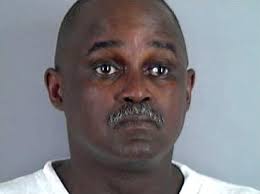

Prosecutors say that while Lorenzo Gilyard was escaping detection as a serial killer for two decades, advances in DNA testing were being made that would eventually link him to seven women who were killed in Kansas City in 1986 and 1987. "The defendant wasn’t counting on the fact that science would catch up with him, but it did," said Ted Hunt, chief trial assistant, during closing arguments in the murder trial. "Twenty years later, a part of his own body is pointing a finger back at him." Six other murder counts, including one stemming from the death of an Austrian national, were dropped last week as the trial got under way, although prosecutors could refile those charges later.
Gilyard, a former trash company supervisor, would face life in prison if convicted of any of the slayings. His fate is being decided by Jackson County District Judge John O’Malley. Prosecutors made DNA evidence linking Gilyard to all seven women the centerpiece of their presentation. The cases were connected in April 2004 when the police department’s crime lab tested evidence from unsolved homicides using a federal grant. His semen or seminal fluid was found on six of the women, and his hair was found on the seventh victim. All of the victims were left in sexually compromising positions. But defense attorney Susan Elliott said the lifestyles of the victims - all but one of whom were prostitutes - suggested it was not only probable but likely that they had sexual contact with other men. The defense went through each of the cases suggesting alternatives, including that one victim was killed as retaliation for talking to the FBI about a drug supplier and that another had been threatened by a boyfriend before her death.